Skip to product information
1 of 3

Bamboo Tea Scoop (Chashaku)

Bamboo Tea Scoop (Chashaku)

Regular price $23.00 USD
Regular price Sale price $23.00 USD
Sale Sold out
Taxes included.
Shipping to the US: from $22, by weight, shown at checkout. US import duty is already included in the price, so there is nothing to pay on delivery. Shipping & duties
Arrives broken? Write within 7 days with three photographs and we send a replacement or a refund. Nothing to post back. Returns & breakage
Quantity

Sending this as a gift? Hand wrapping and a handwritten card can be added in the cart, and we will leave the prices out of the parcel at no charge.

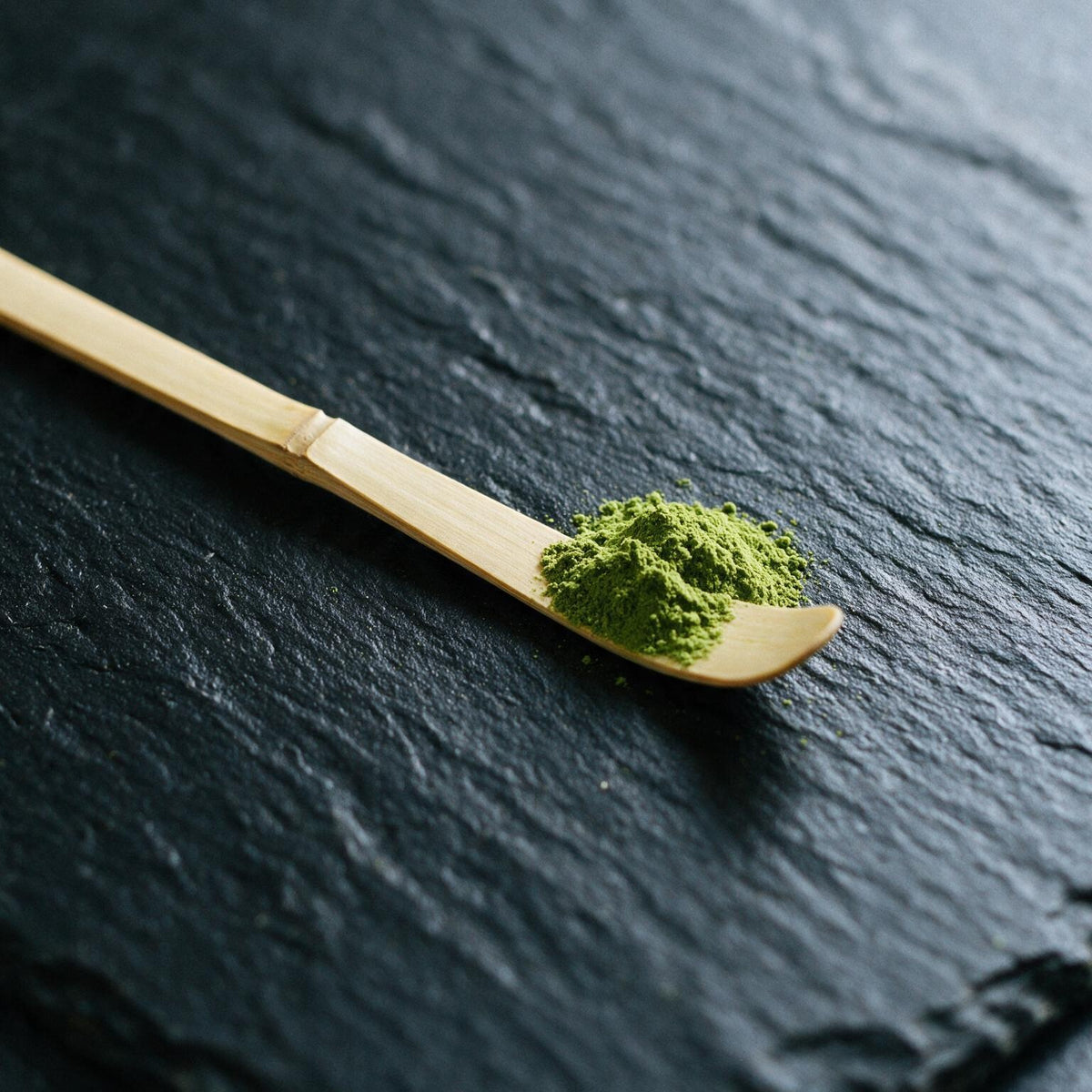
A chashaku is the simplest tool in the set and the least fussed over — rightly so. It is a single piece of white bamboo, curved at one end, that holds roughly one measure of matcha. Two scoops is a bowl.

It is bamboo and nothing else — no varnish, no join, no metal. The curve is bent with heat rather than carved, which is why the grain runs unbroken from handle to tip. That is the whole of the craft, and it is why a good one costs a little more than a spoon and then lasts indefinitely.

The practical case for it is measurement rather than ceremony. Two scoops is a bowl, every time, so you stop guessing and your tea stops varying from one morning to the next. A teaspoon holds roughly twice what a chashaku does, and the gap between two grams and four in a single bowl is the gap between thin tea and something bitter enough to put you off it.

You do not strictly need one; a small spoon works. But there is a quiet pleasure in the right tool for the smallest job, and it costs very little. Wipe it clean and dry — no water needed.

What arrives. One white-bamboo chashaku, about 19 cm long and a centimeter wide, with the node left visible in the shaft. No varnish, no join, no metal.

How much it holds. One scoop is roughly a gram; two scoops is a bowl of thin tea at about two grams. The end is deliberately shallow — it is not a spoon and does not hold a heaped measure, which is exactly what makes it repeatable.

How to hold it. Near the end of the handle rather than the middle, and draw the tea toward you rather than digging. A scoop taken from the surface is consistent; one dug out of the tin is compacted and can be half again as much.

Care. Wipe it with a dry cloth. Do not wash it, do not soak it, and do not put it anywhere warm to dry. Bamboo that has been wetted and then dried quickly is bamboo that splits at the node, and the node is the one part that cannot be repaired.

If you are wondering whether you need one. You do not. A small spoon measures tea. What the chashaku gives you is the same amount every morning without thinking about it, and an object that will outlast every other tool on this list. The quantities, in full.

Shipping is calculated by weight at checkout. For the United States, import duties are paid by us before the parcel leaves Tokyo — there is nothing to pay on delivery.

Specifications

MaterialWhite bamboo, single piece
LengthApprox. 19 cm
HoldsApprox. 1 g of matcha per scoop
Bowl of thin tea2 scoops
CareWipe dry. Do not wash or soak
Expected lifeYears. It only fails if it is soaked
Ships fromTokyo, Japan

View full details

Before you buy

How much matcha does one scoop hold?

Roughly one gram — so two scoops make a standard bowl of thin tea, with 60–70 ml of water. Thick tea takes about double.

Do I actually need one?

No. A half-teaspoon measure works. What you get is a tool that holds the right amount without thinking, cannot scratch a lacquered caddy, and costs very little.

How do I clean it?

Wipe it dry. Bamboo does not want to be washed, and it certainly does not want a dishwasher — water swells it and eventually splits it.

Is this a good gift?

On its own it is small for a gift — but it is a good thing to add to one. It costs little, it is genuinely used, and it completes a set. Hand wrapping and a handwritten card can be added in the cart.

Tomari (とまり) is an old word for a mooring — the place a boat ties up for the night. A bowl of tea is meant to be the same: a few minutes to put the day down. You do not need to know the rules to begin.

Who chose this

I choose everything here by hand, in Japan. I practice tea rather than simply selling the tools for it — I am not a tea master and I do not claim to be. I am a practitioner, which mostly means I have ruined enough bad whisks to know what a good one feels like in the first second of holding it.

Nothing is drop-shipped and nothing passes through a third warehouse. I pack each order in Tokyo and post it from Japan, ceramics double-boxed by hand. If something arrives broken, write within 7 days with photographs of the piece and the box, and I send a replacement or a refund; there is nothing to post back unless I ask. Who writes and chooses all this, and the longer version of why this shop exists.