Skip to product information
1 of 3

Horikawa Aromatic Incense (Shoyeido)

Horikawa Aromatic Incense (Shoyeido)

Regular price $26.00 USD
Regular price Sale price $26.00 USD
Sale Sold out
Taxes included.
Shipping to the US: from $22, by weight, shown at checkout. US import duty is already included in the price, so there is nothing to pay on delivery. Shipping & duties
Arrives broken? Write within 7 days with three photographs and we send a replacement or a refund. Nothing to post back. Returns & breakage
Quantity

Sending this as a gift? Hand wrapping and a handwritten card can be added in the cart, and we will leave the prices out of the parcel at no charge.

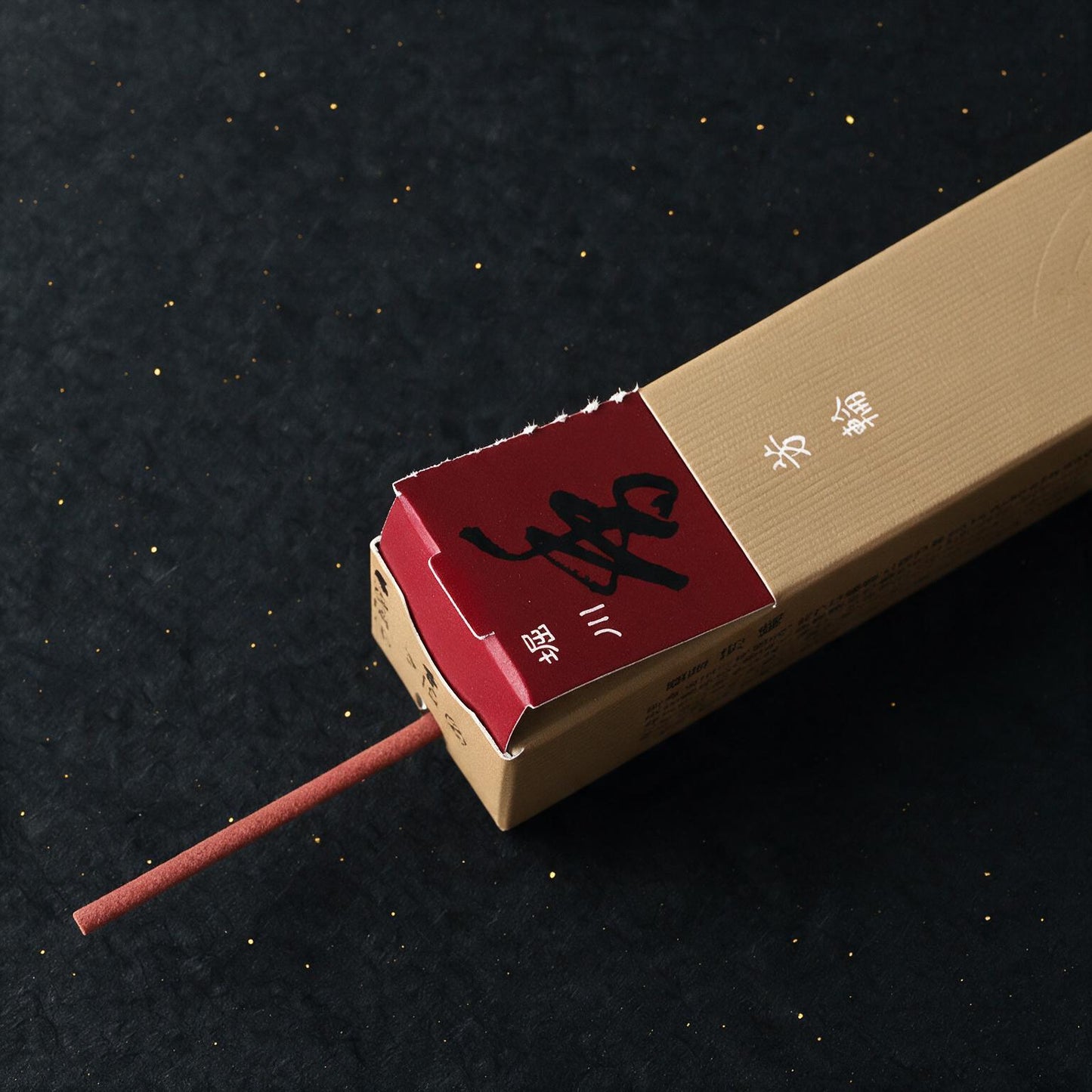
A classic Kyoto blend — soft, layered, unmistakably Japanese. From a house that has made incense for three centuries. 20 sticks.

Horikawa is not a single note. Sandalwood and clove sit underneath, with something drier and more resinous over the top, and the balance shifts as the stick burns down. This is the register most people mean when they say an incense smells Japanese: composed, faintly austere, and entirely uninterested in being liked immediately.

Shoyeido has been blending in Kyoto for around three hundred years, and at that level the work is closer to perfumery than to manufacture. The recipe is the asset and it is not published — what you are buying is a proportion arrived at over generations, which is the sort of thing that cannot be reverse-engineered from an ingredients list.

Like all Japanese incense, these are solid coreless sticks rather than a bamboo splint rolled in paste. Nothing burns except the incense itself, so the scent is clean and the smoke is slight — which is what makes it usable in a small room, and why it does not fight with food or with tea.

How to burn it. Light the tip, let it catch, blow out the flame, and rest the ember in a holder on a heat-safe surface. A small holder keeps the ember off the table and catches most of the ash. Never leave a burning stick unattended.

A note on tea. Scent and tea are not meant to compete: a bowl of matcha has its own aroma, and incense burning beside it flattens both. At home the habit that works is simple — light the stick, let it finish, and then make the tea. How incense is handled in a formal gathering depends on the school and the occasion, and I would rather point you to your teacher than flatten that into a rule.

Keeping it. Store the box closed, away from heat and damp. Incense does not spoil; it simply goes quiet.

Ships from Japan. Shipping is calculated by weight at checkout. For the United States, import duties are paid by us before the parcel leaves Tokyo — there is nothing to pay on delivery.

How long one lasts. A Japanese room stick of this kind burns for around twenty minutes, not the forty-five to seventy that most guides quote for bamboo-cored sticks. Why the numbers differ, and what changes them.

Specifications

MakerShoyeido, Kyoto — incense makers for around three centuries
ProductHorin Horikawa, stick form
ScentLayered Kyoto blend — sandalwood and clove under a drier, resinous top
TypeSolid coreless stick (no bamboo core)
Quantity20 sticks
Stick length70 mm
Burn timeApprox. 20 minutes
UseLight, let it catch, blow out the flame, rest the ember in a holder
CareStore sealed and away from heat and damp
Expected lifeSealed, a year or more. Once the box is open the scent fades within months
Ships fromTokyo, Japan

View full details

Before you buy

What does Horikawa smell like?

A layered Kyoto blend rather than a single note — sandalwood and clove underneath, something drier and more resinous over the top. It is the register most people mean when they say an incense smells Japanese: composed, slightly austere, not sweet.

Who makes it?

Shoyeido, in Kyoto, a house that has been making incense for around three hundred years. Blending at that level is closer to perfumery than to manufacture — the recipe is the asset, and it is not published.

How many sticks, and how do I burn them?

Twenty sticks. Light the tip, let it catch, blow out the flame and rest the ember in a holder on a heat-safe surface. Do not leave it burning unattended.

Is this a good first Japanese incense?

It is a good first serious one. If you have only ever burned Indian masala sticks, start here or with plain sandalwood — both will reset what you think incense smells like. If you want to compare several before committing, the discovery set is the cheaper way in.

Can I burn it during tea?

Before, rather than during. In tea, incense is lit ahead of the guests so that the room has settled by the time anyone sits — scent competing with the tea itself is the thing to avoid.

Is this a good gift?

Yes, particularly for someone who already burns incense and would notice the difference. Shoyeido has been blending in Kyoto for around three hundred years, and Horikawa is a composed blend rather than a single note. If you do not know their taste, the discovery set is the safer gift.

Tomari (とまり) is an old word for a mooring — the place a boat ties up for the night. A bowl of tea is meant to be the same: a few minutes to put the day down. You do not need to know the rules to begin.

Who chose this

I choose everything here by hand, in Japan. I practice tea rather than simply selling the tools for it — I am not a tea master and I do not claim to be. I am a practitioner, which mostly means I have ruined enough bad whisks to know what a good one feels like in the first second of holding it.

Nothing is drop-shipped and nothing passes through a third warehouse. I pack each order in Tokyo and post it from Japan, ceramics double-boxed by hand. If something arrives broken, write within 7 days with photographs of the piece and the box, and I send a replacement or a refund; there is nothing to post back unless I ask. Who writes and chooses all this, and the longer version of why this shop exists.