


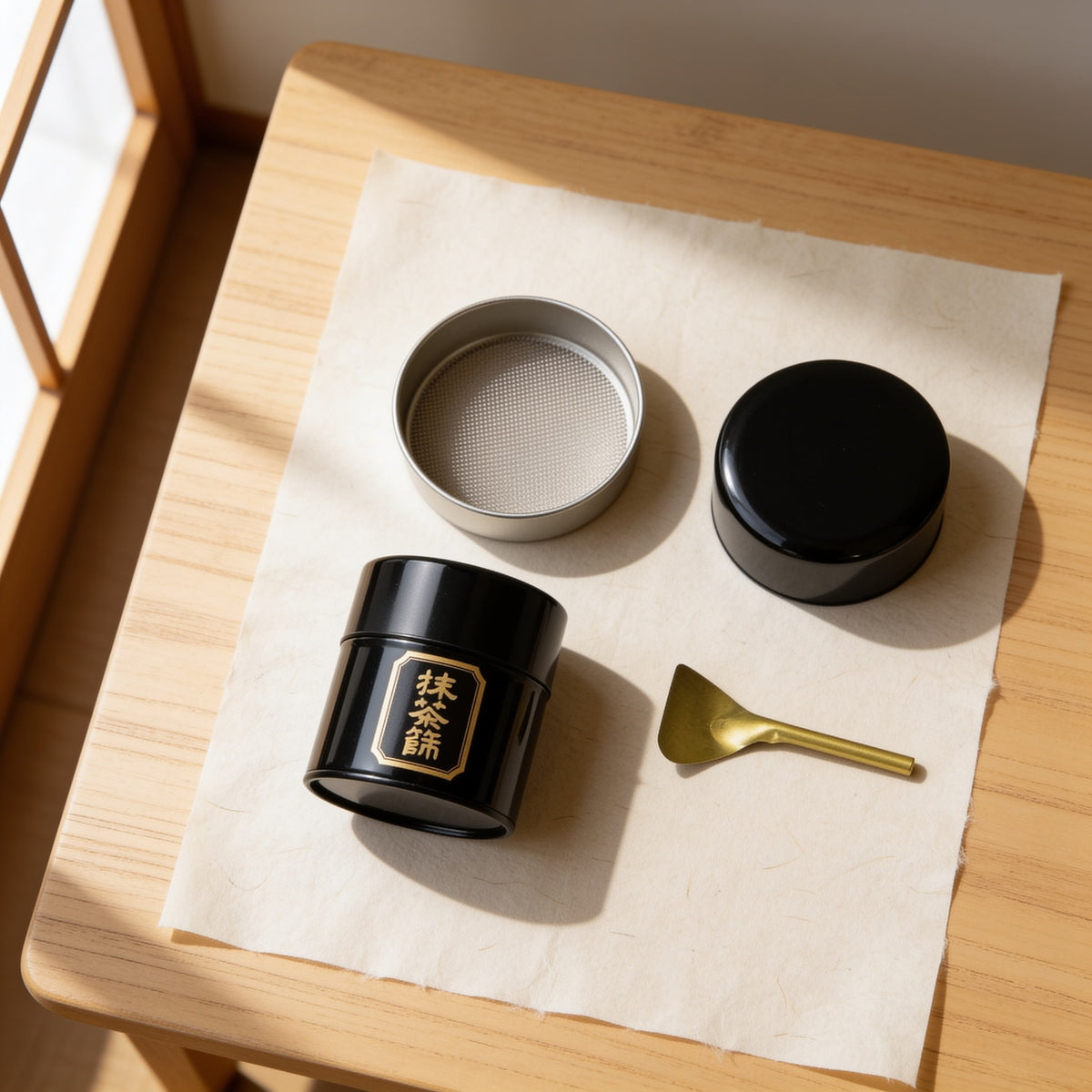
Before you buy
Do I really need to sift matcha?
If you want a smooth bowl, yes. Matcha clumps in the tin as soon as it meets any humidity, and those clumps do not whisk out — they break into smaller lumps that survive to the last mouthful. Twenty seconds of sifting removes the problem entirely.
Will sifting fix old matcha?
It fixes clumping, which is not the same thing. Nothing restores color or sweetness that has oxidized away. If your powder is dull olive rather than vivid green, sift it by all means, but buy a smaller tin next time — matcha holds four to eight weeks after opening.
How do I use it?
Sift a scoop or two straight into a warm, dry bowl immediately before you whisk. Dry matters: a damp bowl will clog the mesh and undo the whole point.
How do I clean it?
Do not wash it. Tap it on the edge of the counter to clear most of the powder, then wipe it with a dry cloth; the canister rusts if it gets wet.
Is this a good gift?
As part of a gift, yes. On its own it is the least romantic object we sell, even though it is one of the most useful. If you are buying for someone who already has a whisk and a bowl, this is the thing they are missing and do not know it.
Tomari (とまり) is an old word for a mooring — the place a boat ties up for the night. A bowl of tea is meant to be the same: a few minutes to put the day down. You do not need to know the rules to begin.
Who chose this
I choose everything here by hand, in Japan. I practice tea rather than simply selling the tools for it — I am not a tea master and I do not claim to be. I am a practitioner, which mostly means I have ruined enough bad whisks to know what a good one feels like in the first second of holding it.
Nothing is drop-shipped and nothing passes through a third warehouse. I pack each order in Tokyo and post it from Japan, ceramics double-boxed by hand. If something arrives broken, write within 7 days with photographs of the piece and the box, and I send a replacement or a refund; there is nothing to post back unless I ask. Who writes and chooses all this, and the longer version of why this shop exists.