


Before you buy
Is this bowl big enough to whisk in?
Yes. It is wide with a flat interior base, which is exactly what the whisk needs — a clear circle to move in and room for foam to rise. Bowls under about 10 cm across are the most common reason a bowl of matcha comes out flat. What to look for in a chawan.
Why black?
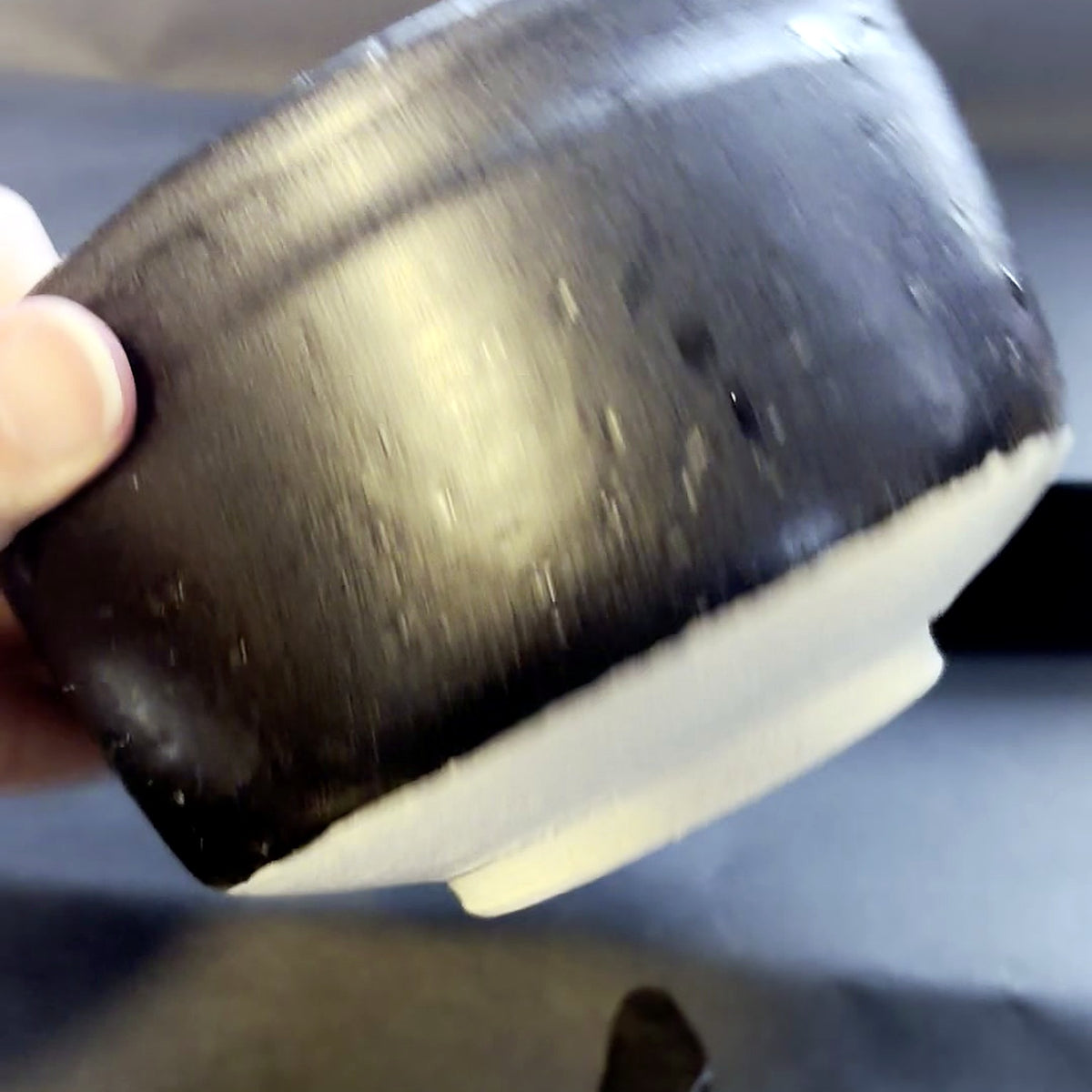
Because you can see what you are doing. Matcha against a dark glaze shows its true color and the texture of the foam, which is genuinely useful while you are learning. Pale bowls flatter the tea less honestly.
What is the pour spout for?
It is a modern convenience, not a traditional feature. If you make lattes or pour matcha over ice it saves a step. For a plain bowl of thin tea, ignore it — the bowl works exactly as a chawan should.
How do I look after it?
Hand wash in warm water and avoid sudden temperature changes: no dishwasher, no going straight from cold water to boiling. Ceramic is the one fragile thing we ship, so it is double-boxed and cushioned by hand. If it arrives damaged, write within 7 days with photographs; we send a replacement or a refund, and there is nothing to post back unless we ask.
Can I use it for anything else?
Yes — it is a good bowl. But if it becomes the soup bowl it will pick up oils that are difficult to get out of an unglazed foot, and matcha will taste of them. Keep it for tea if you can.
Is this a good gift?
Yes, and it is the piece people keep. A bowl is used with two hands every morning, which is a different kind of object from something that sits on a shelf. Ceramics are double-boxed by hand and we replace anything that arrives broken. Hand wrapping and a handwritten card can be added in the cart.
Tomari (とまり) is an old word for a mooring — the place a boat ties up for the night. A bowl of tea is meant to be the same: a few minutes to put the day down. You do not need to know the rules to begin.
Who chose this
I choose everything here by hand, in Japan. I practice tea rather than simply selling the tools for it — I am not a tea master and I do not claim to be. I am a practitioner, which mostly means I have ruined enough bad whisks to know what a good one feels like in the first second of holding it.
Nothing is drop-shipped and nothing passes through a third warehouse. I pack each order in Tokyo and post it from Japan, ceramics double-boxed by hand. If something arrives broken, write within 7 days with photographs of the piece and the box, and I send a replacement or a refund; there is nothing to post back unless I ask. Who writes and chooses all this, and the longer version of why this shop exists.