Skip to product information
1 of 4

Takayama Bamboo Whisk (Chasen), 100-prong

Takayama Bamboo Whisk (Chasen), 100-prong

Regular price $89.00 USD
Regular price Sale price $89.00 USD
Sale Sold out
Taxes included.
Shipping to the US: from $22, by weight, shown at checkout. US import duty is already included in the price, so there is nothing to pay on delivery. Shipping & duties
Arrives broken? Write within 7 days with three photographs and we send a replacement or a refund. Nothing to post back. Returns & breakage
Quantity

Sending this as a gift? Hand wrapping and a handwritten card can be added in the cart, and we will leave the prices out of the parcel at no charge.

The whisk is the one tool that decides whether matcha works at all — and it is where almost everyone goes wrong. A cheap whisk, with too few tines and badly cured bamboo, cannot beat enough air into the tea. It gives you a thin, flat, foamless bowl, and it snaps within weeks. People blame themselves. It was never them.

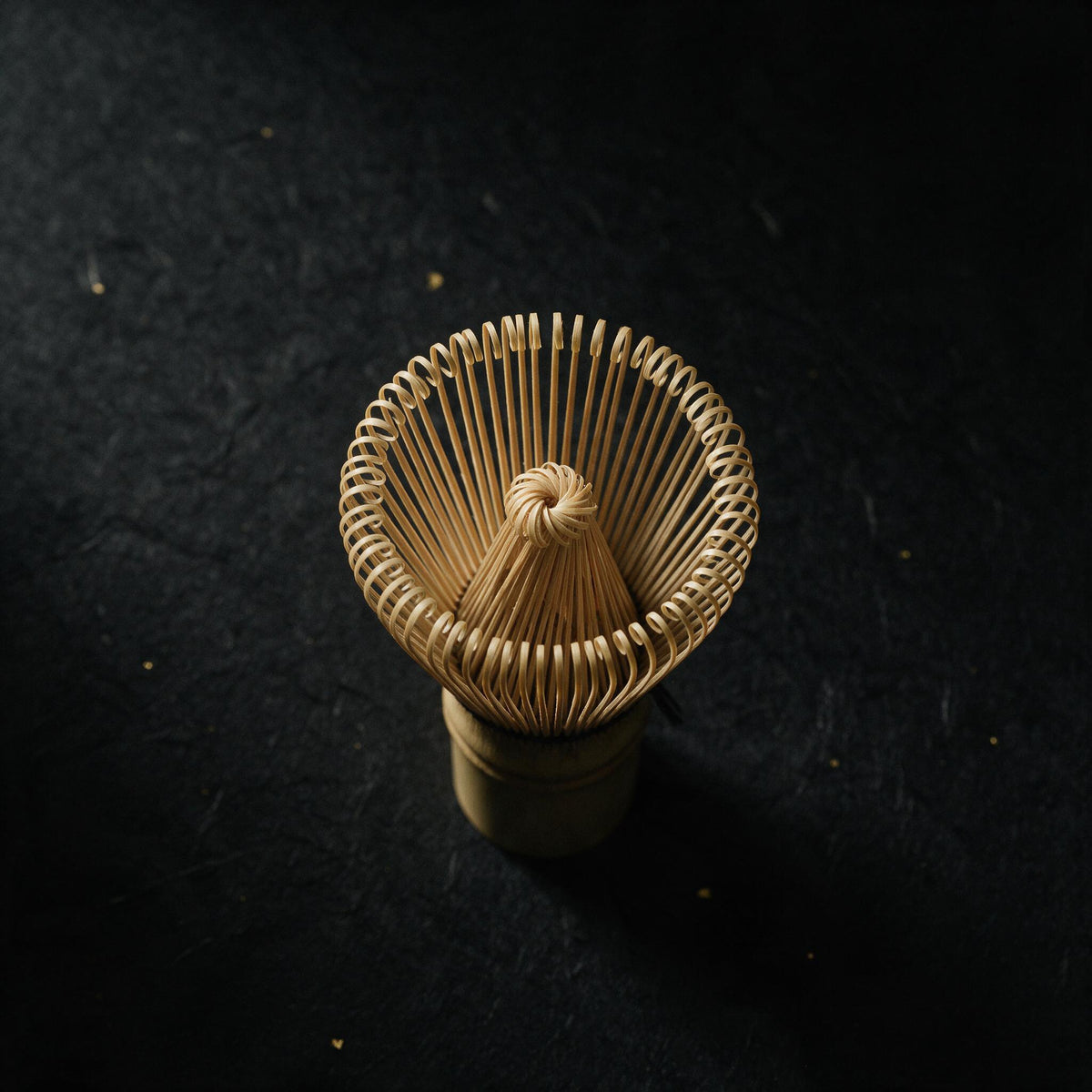
This is a chasen made in Takayama, Nara, the town that has made Japan's tea whisks for about five hundred years. One hundred fine bamboo tines with a spring that holds — which is what lets it whip a dense, creamy microfoam in about fifteen seconds.

Care: rest it on a whisk stand to keep its shape, rinse in warm water only (never soap), never press it hard into the bottom of the bowl, and let it dry fully so it doesn't mold. Treated well it lasts a few months. It is a consumable, like a good brush — and it is the small thing that saves the whole set.

What arrives. One 100-prong chasen, made in Takayama, Nara.

Why Takayama. Roughly nine in ten genuine Japanese whisks come from this one district in Nara, where whisks have been made for about five hundred years. What a Takayama chasen actually is.

A hundred tines rather than eighty. More tines mean finer, denser foam and a gentler action on the bowl; eighty is faster to clean and slightly sturdier. For thin tea at home, a hundred is the easier one to succeed with. The comparison in full.

Before the first bowl. A new whisk arrives with its tines dried straight and closed. Stand it in warm water for about 1 minute so they soften and open, or some will snap the first time you use it. Using a new whisk.

When to replace it. When enough tines have broken that the foam comes out coarse — usually fifteen or twenty, and you will notice the bowl before you notice the whisk. How long one lasts, and what shortens it.

What it will not survive. Detergent, a dishwasher, a microwave, or being left wet in the bowl overnight. Water alone, shaken off, dried with the tines open. That is the entire method. Cleaning and drying.

Ships from Japan. Shipping is calculated by weight at checkout. For the United States, import duties are paid by us before the parcel leaves Tokyo — there is nothing to pay on delivery.

Specifications

OriginTakayama, Ikoma City, Nara Prefecture, Japan
MaterialBamboo
Prongs100 (hyappon-date)
MadeMade in Takayama, Nara
Best forThin tea (usucha) at home
Expected lifeA few months with daily use
CareSoak about 1 minute before use; rinse in warm water only, never soap or dishwasher; dry head down on a whisk stand, or stand it head down with the handle up
Ships fromTokyo, Japan

View full details

Before you buy

How long does a chasen last?

A few months with daily use, six months or more if you make matcha a few times a week. It is a consumable: a hundred fine bamboo tines, and those tines are meant to wear. Losing two or three over its life is normal. Here is how to tell when it is genuinely finished.

Why 100 prong rather than 80?

Finer tines build a denser foam faster, which forgives an unpracticed hand. Eighty is not worse — it is coarser and slightly tougher, and better suited to thick tea. For learning thin tea at home, 100 is the easier tool. The full comparison is here.

How do I care for it?

Soak the tines in warm water for about 1 minute before whisking, so the bamboo is supple. Rinse in plain warm water afterwards — never soap, never a dishwasher, never boiling water. Dry it head down on a whisk stand, which holds the curl while air moves through the tines; with no stand, stand it head down with the handle up. How much life that actually adds is not something anyone has measured honestly, so I will not put a number on it.

What makes a Takayama chasen different from a cheap one?

Where it is made. Takayama, in Nara, has made whisks for about five hundred years and still produces the great majority of Japan's real ones. Why that matters.

My matcha still will not froth. Is it the whisk?

About eight times out of ten, yes — but check the water first, because it is free. Use water at 70–80 °C, not boiling, and 2 g of sifted matcha to 60–70 ml. The five causes, in order of likelihood.

Is this a good gift?

For someone who already makes matcha, yes — this is the upgrade they have probably been putting off. For someone starting from nothing, a set is kinder, because a whisk alone still leaves them needing a bowl. Hand wrapping and a handwritten card can be added in the cart.

Tomari (とまり) is an old word for a mooring — the place a boat ties up for the night. A bowl of tea is meant to be the same: a few minutes to put the day down. You do not need to know the rules to begin.

Who chose this

I choose everything here by hand, in Japan. I practice tea rather than simply selling the tools for it — I am not a tea master and I do not claim to be. I am a practitioner, which mostly means I have ruined enough bad whisks to know what a good one feels like in the first second of holding it.

Nothing is drop-shipped and nothing passes through a third warehouse. I pack each order in Tokyo and post it from Japan, ceramics double-boxed by hand. If something arrives broken, write within 7 days with photographs of the piece and the box, and I send a replacement or a refund; there is nothing to post back unless I ask. Who writes and chooses all this, and the longer version of why this shop exists.