


The Whole Setting — bowl, whisk, holder, scoop, and the tea
The Whole Setting — bowl, whisk, holder, scoop, and the tea
Arrives broken? Write within 7 days with three photographs and we send a replacement or a refund. Nothing to post back. Returns & breakage
Not open yet
This box includes matcha, and we are completing the paperwork that lets us send food to the United States properly. Leave your email below and you will hear the day it opens.
Couldn't load pickup availability
The season, in a single bowl. Everything for a proper one, including the bowl it is meant to be made in.
A bowl is where people overthink and overspend, and also where they under-think entirely and use a mug.
You need less than you imagine and more than a mug gives you. Enough width that the whisk can move — a mug’s straight sides trap the tines and the foam never forms. Enough depth that the tea does not slop over the rim when you whisk fast. And enough weight that the bowl stays put under your hand instead of skating across the counter. That is the whole specification. Everything past it is preference.
This one is Mino-yaki, from Japan’s oldest and largest pottery region, in a matte ink-black glaze that reads quiet next to the green of the tea. Around 375 g, wide enough to whisk in comfortably, with a pour spout — a sensible modern addition if you make lattes or pour over ice, and no hindrance at all for a plain bowl of thin tea.
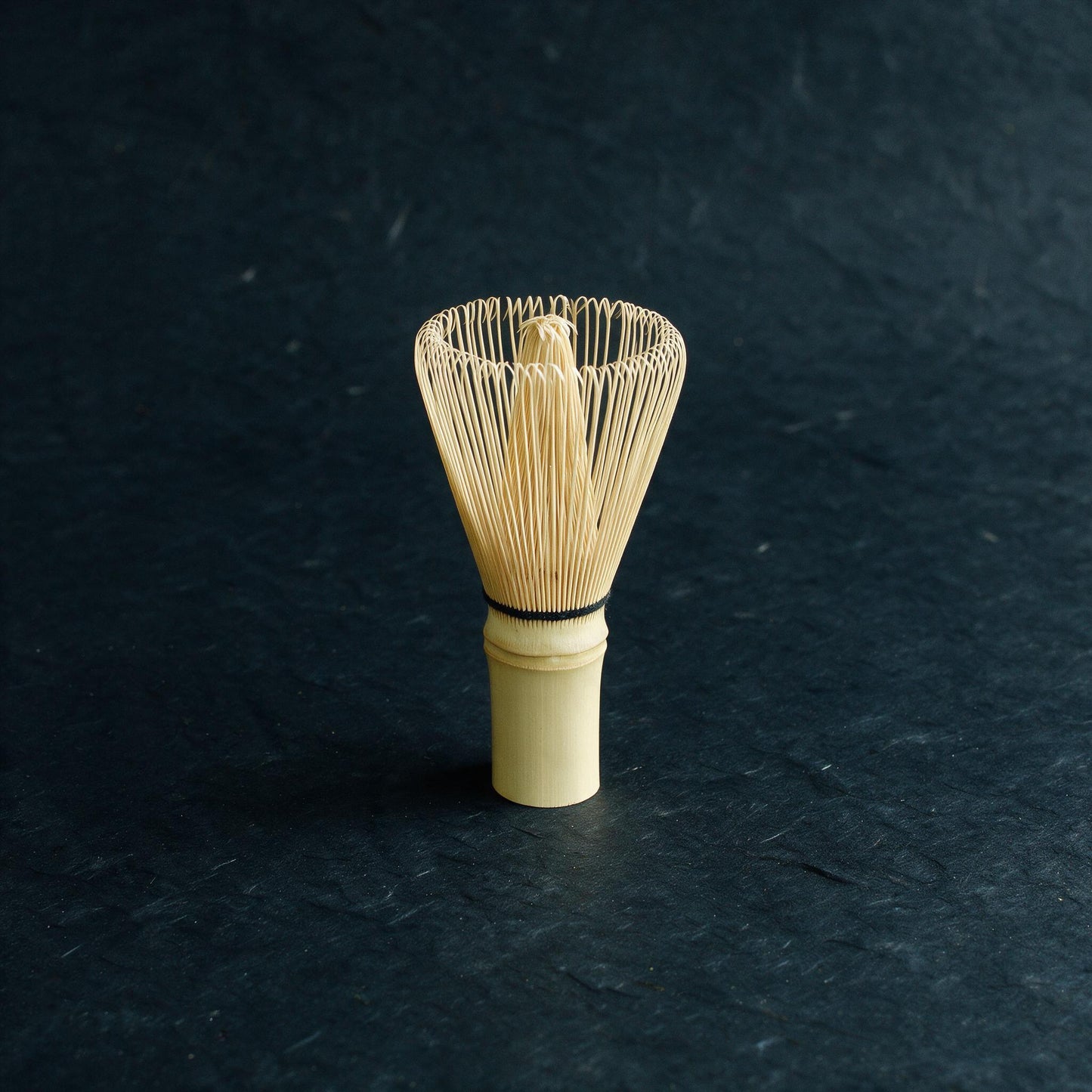
With it, the two tools that decide whether any of it works: a Takayama chasen of a hundred bamboo tines, and a white-bamboo scoop. And a tin of shade-grown matcha, sweet at the front, to fill them.
This is the full setting — the same one you would spend a fortnight assembling from four different shops. At checkout you choose how it travels: Standard airmail, tracked, usually one to two weeks, or Express EMS, tracked and insured, usually three to six days once it leaves Tokyo.
Ceramics are the one fragile thing I ship. Each bowl is double-boxed and cushioned by hand. If yours arrives damaged, send a photo — I replace it, and you do not post anything back.
A note on the word. “Ceremonial grade” is how this tea is sold in English. Japan has no such grade — there is no board, no certificate, and no line in any regulation. The phrase has stayed because it points at something real: leaf grown under shade and meant for a bowl rather than for milk. That is what is in the tin. The longer answer is here.
What’s inside
- Mino-yaki chawan — matte ink-black, pour spout, about 375 g
- Takayama chasen, 100 tines — made in Takayama, Nara
- White bamboo scoop (chashaku)
- Whisk holder (kusenaoshi) — the whisk dries in its curve instead of splaying flat
- Ceremonial tin, 30g — about 15 bowls
- Method card · double-boxed and packed by hand in Tokyo
Add the sifter — $30
Matcha clumps in the tin, and those clumps never whisk out. Sifting takes two seconds and it changes more than it looks like it should. The least glamorous thing here and quietly the most useful. Add the sifter.
Shipping & duties
Shipping to the US is calculated by weight at checkout. Packed to order in Tokyo and dispatched within 5 business days. In transit, choose Standard airmail (tracked, usually 1–2 weeks) or Express EMS (tracked and insured, usually 3–6 days) at checkout. Since the $800 de minimis exemption ended, every parcel into the United States is dutiable regardless of value. We declare every parcel accurately and pay that duty before it leaves Tokyo, so there is nothing for you to pay on delivery — Shipping & duties.
Monthly Matcha Club — the season, delivered
One tin and a seasonal sweet each month, chosen to the old Japanese calendar of twenty-four seasons. It is not open yet. Leave your email and you will hear before anyone else.
About
I practice tea in Tokyo, badly and every week. Tomari is the shop I wanted when I started and could not find: no mystique, no thousand-dollar bowls, and someone willing to tell you which of it you actually need.
Specifications
| Contents | Mino-yaki bowl, Takayama chasen, bamboo chashaku, matcha for whisking 30 g tin, and a method card |
|---|---|
| Bowl | Mino-yaki stoneware, matte ink-black, with a pour spout (katakuchi) |
| Bowl size | Approx. 12.5 cm across the rim, 7.5 cm tall, approx. 375 g |
| Whisk | Takayama chasen, 100 tines, bamboo |
| Whisk origin | Takayama, Ikoma City, Nara Prefecture, Japan |
| Scoop | White bamboo chashaku, approx. 19 cm. Two scoops is about 2 g, one bowl |
| Matcha | 30 g, about 15 bowls |
| Origin | Bowl: Mino, Gifu. Whisk: Takayama, Nara. Whisk holder: made in China. Matcha: Japan. Each piece sourced individually |
| Not included | Sifter |
| Expected life | The whisk A few months with daily use. The bowl and scoop should outlast it by years |
| Care | Whisk: warm water only, never soap, dry head down on a whisk stand, or stand it head down with the handle up. Bowl: hand wash, no dishwasher, avoid sudden temperature change |
| Keeping it | Sealed, 7–8 months. Once opened, 4–6 weeks for best flavor; keep it cold and closed |
| Packing | Ceramics double-boxed and cushioned by hand, in washi paper, Tokyo |
| Ships from | Tokyo, Japan |

Add this too
Matcha Sifter (Furui) $30.00
Matcha packs hard in the tin. Pressed through this once, it whisks without lumps and the froth comes finer.
In stock


Which box is yours
The four boxes differ in one thing only: how much of the equipment you already own. The matcha is the same in all of them.
| What is included | Two Matchas$45 | Whisk & Matcha$65 | The Whole Setting$95 | Matcha & Sweets$65 |
|---|---|---|---|---|
| Matcha to whisk, 30 g tin | Yes | Yes | Yes | Yes |
| Everyday matcha for milk and ice, 20 g | Yes | — | — | — |
| Takayama whisk and bamboo scoop | — | Yes | Yes | — |
| Mino-yaki bowl | — | — | Yes | — |
| Seasonal sweets and kaishi paper | — | — | — | Yes |
| You will still need | A whisk and a bowl | A bowl | Nothing | A whisk and a bowl |
| Best if | You already have the tools and want the tea | You have a bowl at home you like | You are starting from nothing | You want the pairing, not the equipment |
A bowl is the one piece you can improvise — any wide cup will do to begin. A whisk is the one you cannot: a fork drags and a milk frother beats in air, and the powder stays at the bottom either way.
Before you buy
Is the bowl dishwasher safe?
No. Hand wash it in warm water and avoid sudden changes of temperature. Treated that way it will outlast everything else in the box.
Can I use the bowl for lattes and iced matcha?
Yes — it has a pour spout, which is exactly what makes that easy. Whisk in the bowl, then pour into a glass.
What happens if the bowl breaks in transit?
Write within 7 days of delivery with photographs of the piece and the box, and we send a replacement or a refund; there is nothing to post back unless we ask. Ceramics are double-boxed and cushioned by hand before they leave Tokyo.
Do I still need a sifter?
It is the one useful thing this box leaves out. Matcha clumps in the tin and those clumps never whisk out. A sifter takes two seconds and changes more than it looks like it should.
How long will each piece last?
The whisk a few months with daily use, because it is a consumable. The bowl and scoop should outlast it by years. When the tines start breaking, replace only the whisk.
Monthly Matcha Club
One tin, and the sweet that belongs to the month
I am putting together a monthly box: matcha for whisking, and a seasonal Japanese sweet that changes as the year does. It is not open yet. Leave your email and you will hear first, before it goes to anyone else.
No newsletter. One message when it opens, and you can leave at any time.
Tomari (とまり) is an old word for a mooring — the place a boat ties up for the night. A bowl of tea is meant to be the same: a few minutes to put the day down. You do not need to know the rules to begin.
Who chose this
I choose everything here by hand, in Japan. I practice tea rather than simply selling the tools for it — I am not a tea master and I do not claim to be. I am a practitioner, which mostly means I have ruined enough bad whisks to know what a good one feels like in the first second of holding it.
Nothing is drop-shipped and nothing passes through a third warehouse. I pack each order in Tokyo and post it from Japan, ceramics double-boxed by hand. If something arrives broken, write within 7 days with photographs of the piece and the box, and I send a replacement or a refund; there is nothing to post back unless I ask. Who writes and chooses all this, and the longer version of why this shop exists.